





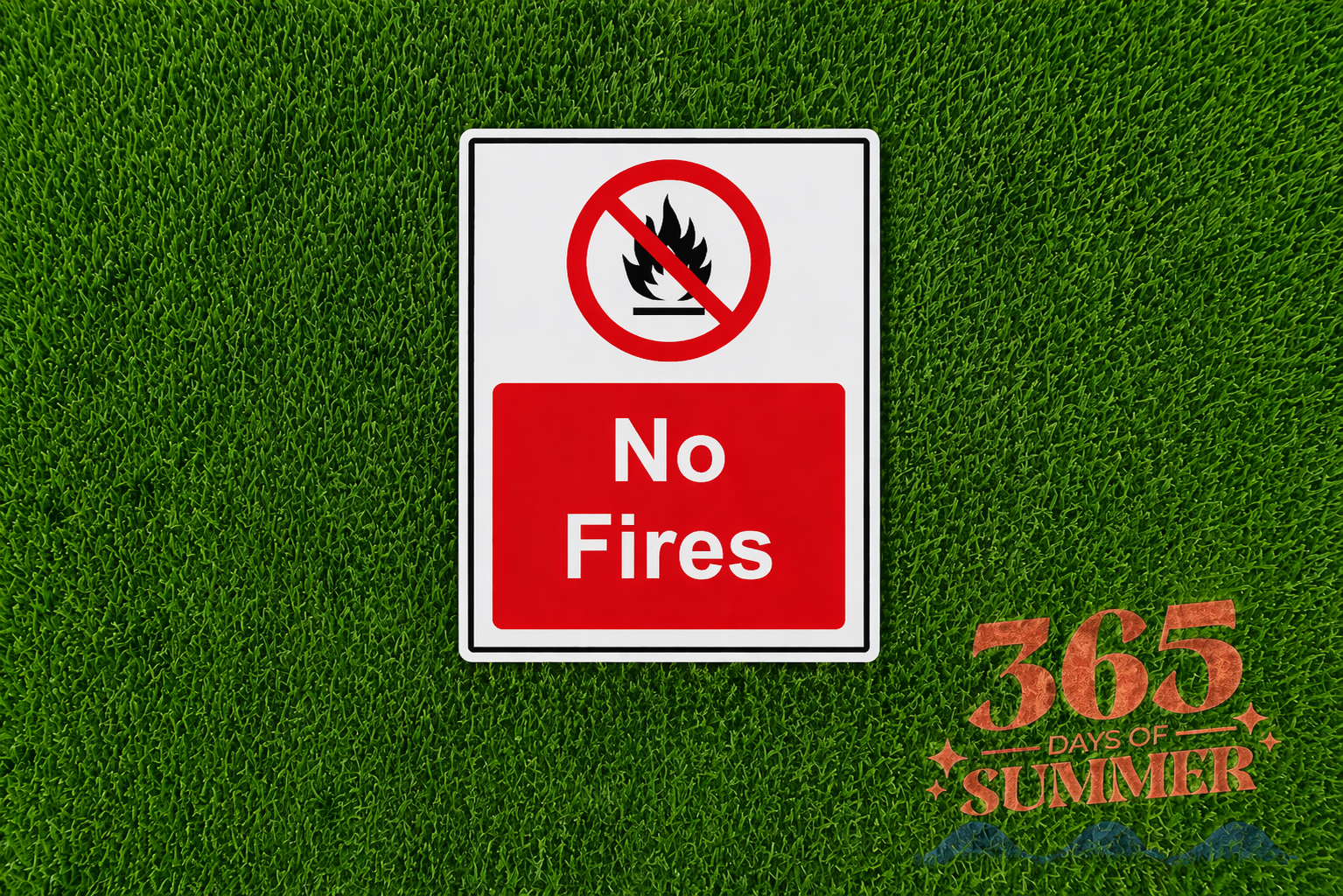
In a word? Yes. Artificial grass can catch fire under the wrong circumstances. Here’s how to minimise risks and avoid your faux turf catching alight.
TL;DR - How to reduce the fire risk
Artificial grass is safe for all homes, but it pays to take a few precautions.
Keep all naked flames well away from the surface.
Place barbecues, fire pits, and heaters on solid, heatproof ground.
Choose sand infill rather than crumb rubber where possible.
Don’t leave cigarettes, hot coals, or fireworks near the lawn.
Use protective mats under garden equipment that generates heat.
Supervise outdoor parties where heat sources are in use.
Safety remains a crucial factor when selecting new products and surfaces for your home – especially when considering artificial grass and the summer season.
From savage UV rays and red-hot disposable barbeques to free-standing cooking stations, fire pits, cigarettes, and party-led fireworks, it’s worth understanding how fake turf reacts towards potential fire hazards for everyone’s safety.
The big question then - can artificial grass catch fire? The answer is yes, but it doesn’t ignite in the same fashion as natural grass, wood, or other substances. Synthetic turf remains heat sensitive and will scorch or disfigure, rather than fuel a spreading fire. In most circumstances, fake grass will discolour or melt rather than ignite – but that’ll still cause unwanted repair and replacement bills.
It therefore remains imperative to protect artificial grass against exposure to naked flames and extreme heat, especially in high-risk areas – such as dry-climate balconies, rooftops, and other uncovered spots. Not to mention any use indoors.
When learning about fire safety, the last thing anybody wants is a wall of information. GrassDirect is here to keep you right without the waffle, and our Artificial Turf fire safety guide holds all the pointers you need to keep things safe.
Is Artificial Grass fire resistant?
Synesthetic grass is not highly flammable, but it does remain sensitive to heat. Especially if it’s direct – such as the bottom of a BBQ or a misplaced firepit. Subject artificial turf to extremely high temperatures or direct flames, and you run the risk of setting your fake grass alight.
Artificial lawn products are typically made from polypropylene, nylon, or polyethylene, and while they will resist the flame for longer than dry natural turf, they are not immune. Although it is unusual for artificial turf to spread flame, instead melting to prevent the risk of an ongoing fire, the damaged area will likely need to be cut out and replaced – which raises its’ own complications.
What about the infill?
Infill rests between turf blades to provide support, stability, cushioning, and weight. Besides helping fake grass fibres stay upright against wind, rain and footfall, infill also influences how heat behaves on the surface.
Common infill options include silica sand, crumb rubber, and organic materials that include cork or – in some cases – coconut fibre. Infill may not ignite easily by itself, but it can influence how fire behaves on the surface.
Sand infill remains the most common installation, offering a non-combustible foundation to help enhance fire resistance. It acts like a buffer between the heat source and the backing while also improving drainage. Sand is where it’s at.
Shredded crumb rubber infill is typically made from recycled tyres and, while effective as a flexible base, it doesn’t provide the same fire-resistant qualities as sand. If exposed to enough severe heat, then it can burn and release unpleasant toxins.
Organic infills are more natural, but they can dry out in hot weather and may smoulder if exposed to heat for long enough. A non-flammable infill (such as sand) is the safest option and our recommendation.
Keeping grass cool
Artificial grass can increase in temperature when faced with direct sunlight, especially during the height of summer. When heatwaves arrive with Celsius exceeding 35 and off-the-scale humidity, the surface of your faux turf can reach irksome temperatures that could spark issue.
Although scorching-summer heat won’t usually cause it to ignite, a hot surface is more vulnerable to damage when throwing another source of extra heat into the mix. Naturally, the potential for trouble increases as the good weather moves in and BBQ season arrives. Safe practice when operating a barbeque means more than ‘just’ avoiding food poisoning – it also means preserving your garden against fire damage. You can find more information about keeping on the right side of the flame with our BBQ safety guide.
There are a number of things that you can do to keep your artificial lawn cool throughout upcoming heat-heavy seasons. Firstly, hose it down with water during unusually hot weather, and add shade with parasols, planters, awnings or pergolas. Opt for light-coloured sand infill where appropriate, as this can help to regulate and vanquish surface temperature.
Secondly, avoid placing reflective objects nearby - such as mirrors, shiny metal, or low-emissivity windows, as reflected sunlight can create intense hot spots.
Summer activities
Summer is when artificial grass works hardest, and when it’s also most likely to come into contact with an incendiary – the grandest offenders being the pizza oven, barbeque or a firepit/chiminea.
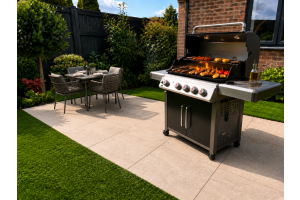
Never place a barbecue directly onto artificial grass. Even if there’s no open flame touching the turf, the fierce heat underneath can melt artificial fibres and backing within minutes. Always position barbecues on a solid, heat-resistant surface such as paving or decking. If you are really struggling, then the likes of a disposable barbeque can be carefully placed on bricks.
Fire pits and chimineas should be placed on paving slabs where flying embers and radiant heat can’t create potential for scorch marks or fire damage. The same story applies to fireworks, sparklers and hot ash as they can instantly melt artificial turf and, in worst case scenarios, ignite parts of the surface and surrounding materials.
Freestanding patio heaters and pizza ovens can generate serious heat, too. Keep them a safe distance away and make sure any hot trays, tools, or fuel don’t come into contact with your faux turf.
What to do if artificial grass catches fire
If artificial grass does catch fire, it’s best to act quickly and safely. Remove the source of the flame if it is safe to do so and use water or a garden hose to cool and extinguish the affected area.
For small fires, a household fire extinguisher may help if suitable for the source of the fire. However, if the fire begins to spread, call the fire service immediately.
Keep people and pets away from the damaged area until it has fully cooled and is safe to walk across.
Once the fire is out, inspect the turf carefully. Even small incidents can cause melting, shrinking, or damage to the backing. In many cases, the affected patch can be repaired, but more severe burns may require replacement - while damage areas can be patched, an exact match isn't always guaranteed due to batch differences, though this can become less noticeable over time.